






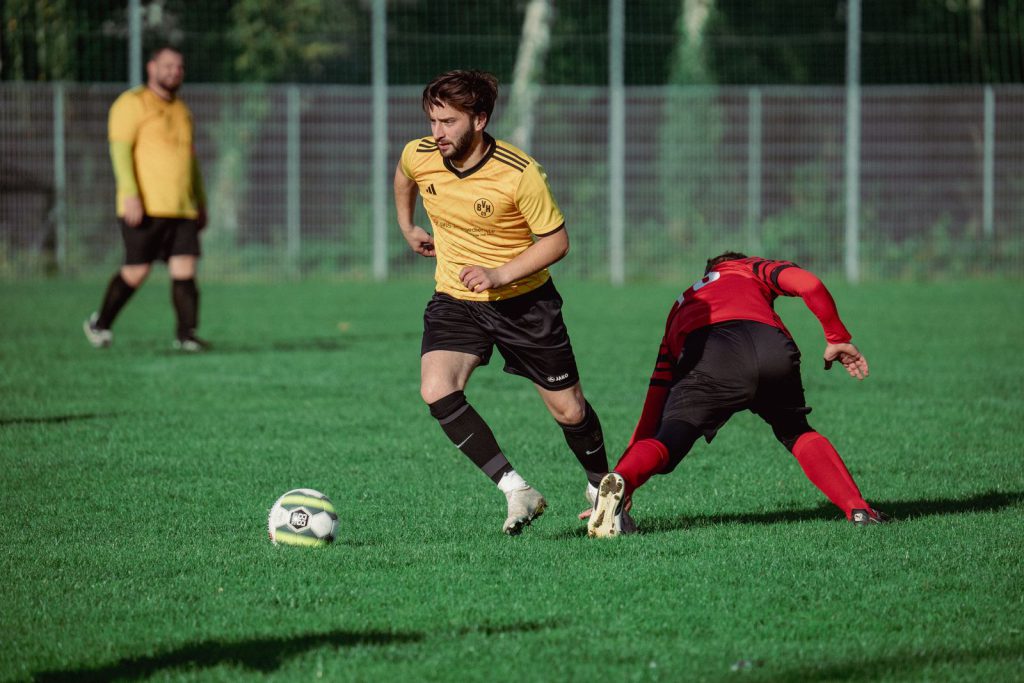
Are you a sports fan, or do you prefer watching from the sofa? Either way, sport is a topic you should prepare for. It comes up often in IELTS Speaking Part 2, and the examiner may ask you about a sport you play, a famous athlete or a popular sport in your country.
Don’t worry if you are not sporty: you can still give a strong answer with the right vocabulary. Below you will find five sport cue cards with band 7+ sample answers, useful sports vocabulary, and typical Part 1 and Part 3 questions with answers.
You get a cue card and 1 minute to make notes. Then you speak for 1 to 2 minutes. Cover every point on the card, add a short example or story, and finish with the “explain” part.
Sport cue cards with sample answers
Describe a sport that is popular in your country.
You should say:
- what the sport is
- how it is played
- who plays or watches it
and explain why it is popular in your country.
Sample Answer:
The most popular sport in my country is definitely football. You can see children kicking a ball around in almost every park and school yard, and on match days the cafés and bars are packed with fans.
The rules are simple, which is part of its appeal. Two teams of eleven players try to score by getting the ball into the other team’s goal, and they can use any part of the body except their hands and arms. Only the goalkeeper can handle the ball.
I think it is so popular for several reasons. First, you need almost no equipment: just a ball and some space. Second, it brings people together. Supporting the national team is something the whole country shares, and big tournaments create an amazing atmosphere. Personally, I’m not a great player, but I love watching the big matches with my friends.
Describe a famous athlete or sports team that you admire.
You should say:
- who the athlete or team is
- how you know about them
- what they have achieved
and explain why you admire them.
Sample Answer:
An athlete I really admire is Serena Williams, the American tennis player. I first watched her on television when I was a child, and over the years I followed almost every major tournament she played.
Her achievements are incredible. She won twenty-three Grand Slam singles titles, which is a record in the modern era of tennis, and she was ranked number one in the world for many years. She even won the Australian Open while she was pregnant.
I admire her not only for her results, but for her mental strength. She faced a lot of criticism and several serious injuries during her career, but she always came back stronger. She also used her fame to speak about equality, which inspired many young people, especially girls, to take up sport.
Describe a sport you would like to learn.
You should say:
- what the sport is
- how you would learn it
- what equipment you would need
and explain why you would like to learn it.
Sample Answer:
A sport I have always wanted to learn is surfing. I tried it once on holiday in Portugal, but I spent most of the lesson falling off the board, so I would love to learn it properly.
Ideally, I would take a week-long course at a surf school, because surfing is quite technical and it is much safer to learn with a qualified instructor. You don’t need much equipment to start: a wetsuit and a soft beginner’s board, which you can usually rent at the school.
I would like to learn it because it combines sport with being in nature. Surfers I have spoken to say that catching a wave is one of the best feelings in the world. It is also a great full-body workout, and it would give me a reason to travel to beautiful coastlines.
Describe a workout routine that helps people stay fit.
You should say:
- what the routine is
- how often people should do it
- how it is performed
and explain why you think it is effective.
Sample Answer:
The routine I would recommend is a simple combination of cardio and strength training that you can do three times a week, even without going to a gym.
Each session lasts about forty minutes. You start with a ten-minute warm-up, such as brisk walking or light jogging. Then you do twenty minutes of bodyweight exercises like squats, push-ups, lunges and planks, in short rounds with brief rests. Finally, you finish with ten minutes of stretching.
I think it is effective because it works the whole body and improves both stamina and strength. It is also realistic: you don’t need any equipment or a gym membership, so there are no excuses. In my experience, the key to staying fit is not doing something extreme, but doing something you can stick to.
Describe a popular place for sports in your city.
You should say:
- where it is
- what people do there
- how often you go there
and explain why it is popular.
Sample Answer:
A very popular place for sport in my city is a large park along the river, just outside the city centre.
It has something for everyone. There is a running and cycling path along the riverbank, several outdoor basketball courts, an open-air gym and a big grass area where people play football or do yoga. In winter, part of the park is even turned into a cross-country skiing track.
I go there two or three times a week to run, usually early in the morning. I think it is so popular because all of it is free and open to everyone, and it is a beautiful place to exercise. It is also very social: you often see the same faces, and many people meet their friends there after work.
Useful sport vocabulary for IELTS
These words and phrases will help you sound more precise and natural:
| Topic | Words and phrases |
|---|---|
| Playing sport | to take up a sport, to work out, to keep fit, a team sport, an individual sport, an extreme sport |
| Competition | to compete, a tournament, to win a title, a record, a fierce rival, to be knocked out |
| Fans and watching | a die-hard fan, to support a team, a nail-biting match, a stadium, the atmosphere |
| Fitness | stamina, strength, flexibility, to warm up, to build muscle, a sedentary lifestyle |
| Useful phrases | to be into sport, to get the adrenaline pumping, a couch potato, to stay in shape |
IELTS Speaking Part 1: sport questions
Part 1 questions are short and personal. Give a direct answer and add a reason or an example.
1Do you like sport?
Yes, I do, although I prefer doing it to watching it. I go running a few times a week, and I play badminton with my colleagues on Thursday evenings.
2What sports are popular in your country?
Football is by far the most popular, but basketball and ice hockey also have a lot of fans. Recently, running has become very fashionable, and many people take part in city marathons.
3Did you play any sports when you were a child?
Yes, I played basketball at school for about five years. I was never the best player on the team, but I loved the team spirit and the matches at the weekend.
4Do you prefer team sports or individual sports?
These days I prefer individual sports like running, because I can do them whenever I like. But I think team sports are more fun, because you share the wins and losses with others.
IELTS Speaking Part 3: sport discussion questions
New to Part 3? See how to give band 7+ answers in Speaking Part 3, with simple and stronger answers compared.
Part 3 questions are about sport in society. Give longer answers with reasons and examples.
1What are the benefits of playing sport?
The physical benefits are obvious: sport keeps you fit and reduces the risk of many illnesses. But I think the mental benefits are just as important. Exercise relieves stress, and team sports also teach people cooperation, discipline and how to deal with losing.
2Should sport be compulsory at school?
I think it should. Many children spend hours in front of screens, so school may be the only place where they are physically active. However, schools should offer a variety of activities, not just competitive team games, so that every child can find something they enjoy.
3Why are professional athletes paid so much?
Mainly because sport is a huge business. Top athletes attract millions of viewers, which brings in money from TV rights, tickets and sponsorship. Some people think it is unfair compared to nurses or teachers, but in a way athletes are paid for their entertainment value, like film stars.
Practise on your own
Choose one of the cue cards above, set a timer for 1 minute to make notes, and then record yourself speaking for 2 minutes. Listen back and check whether you covered every point and used some of the vocabulary from this page. For more topics, see IELTS Speaking Part 2 topics and cue cards with answers.