






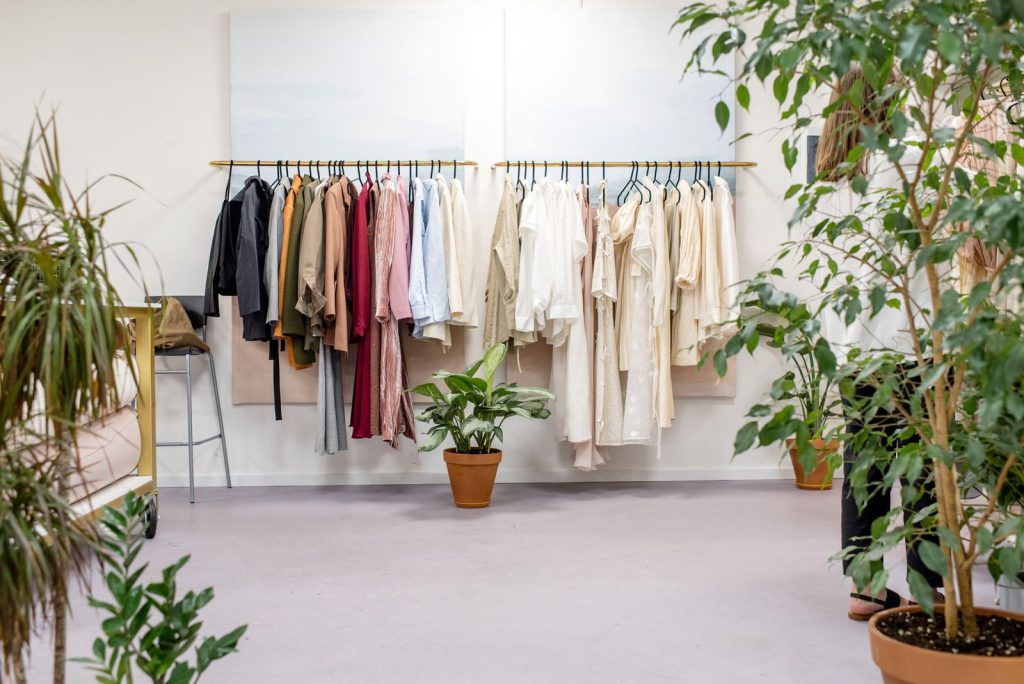
Your favourite item of clothing, traditional dress in your country, an outfit you wore for a special occasion: clothes and fashion appear regularly in IELTS Speaking Part 2, and they are also a common Part 1 topic.
Even if you are not interested in fashion, you can do well here by describing colours, materials and the story behind the clothes. Below you will find four clothes and fashion cue cards with band 7+ sample answers, useful vocabulary, and typical Part 1 and Part 3 questions.
You get a cue card and 1 minute to make notes. Then you speak for 1 to 2 minutes. Cover every point on the card, add a short example or story, and finish with the “explain” part.
Clothes and fashion cue cards with sample answers
Describe a piece of clothing you like to wear.
You should say:
- what it is
- where you got it
- when you wear it
and explain why you like it.
Sample Answer:
My favourite piece of clothing is an old dark-green wool jumper that used to belong to my grandfather. My grandmother gave it to me a few years after he passed away, because she knew I had always liked it.
It is quite thick and a bit too big for me, with leather patches on the elbows and a high collar. It is definitely not fashionable, and one sleeve has a small hole that my grandmother repaired.
I mostly wear it at home on cold winter evenings, or when I go for long walks in the countryside. I like it partly because it is so warm and comfortable, but mainly because of the memories. When I wear it, I remember my grandfather sitting in his armchair in exactly the same jumper, telling us stories about his childhood.
Describe traditional clothes in your country.
You should say:
- what they look like
- who wears them
- when they are worn
and explain how you feel about them.
Sample Answer:
In my country, the traditional costume is a folk dress that is different in every region. In my grandmother’s area, the women’s version has a long, striped woollen skirt, a white linen blouse with embroidered sleeves and a colourful headscarf.
The men’s costume is simpler: dark trousers, a white shirt, a wool waistcoat and a belt with a woven pattern. The colours and patterns tell you exactly which village or region someone comes from.
Today almost nobody wears them in everyday life. You see them mainly at song and dance festivals, national holidays and sometimes at weddings. I feel quite proud of them, because each costume is a piece of history, and many of them are still made by hand. I do not own one myself, but I would like to have one made one day.
Describe a time when you wore something special.
You should say:
- what the occasion was
- what you wore
- how you chose it
and explain how you felt wearing it.
Sample Answer:
The last time I wore something really special was at my best friend’s wedding last summer, where I was one of the bridesmaids.
All the bridesmaids wore the same long dress in a soft lavender colour, made of light silk, with flowers in our hair that matched the bride’s bouquet. We did not choose the dresses ourselves: the bride picked them, and we went together to a small dressmaker’s shop for three fittings so they would fit perfectly.
At first I felt a bit nervous, because I usually wear jeans and trainers, and I was worried about tripping on the long skirt. But once the ceremony started, I felt elegant and quite proud to be part of such an important day. The photos turned out beautifully, and the dress is still hanging in my wardrobe.
Describe a fashion trend you have noticed.
You should say:
- what the trend is
- who follows it
- how long it has been popular
and explain what you think of it.
Sample Answer:
A trend I have noticed in the last few years is the popularity of second-hand and vintage clothes, especially among young people.
Students and people in their twenties are the main followers. Instead of buying new clothes in big chain stores, they shop in charity shops, vintage markets and online apps where people sell clothes they no longer wear. Some of my friends hardly buy anything new any more.
It has been growing for about five or six years, I would say. I think it is a really positive trend. It is cheaper, it reduces waste, because the fashion industry produces a huge amount of pollution, and it means people’s clothes are more individual. The only downside is that it takes much more time to find something you like in your size.
Useful clothes and fashion vocabulary for IELTS
Try to replace basic words like “clothes”, “nice” and “old” with more precise vocabulary:
| Topic | Words and phrases |
|---|---|
| Types of clothes | casual wear, formal wear, an outfit, a garment, sportswear, traditional costume |
| Describing clothes | loose-fitting, tight-fitting, comfortable, stylish, old-fashioned, hand-made, embroidered |
| Materials | cotton, wool, linen, silk, leather, denim, synthetic fabric |
| Fashion | a fashion trend, to be in fashion, to go out of fashion, fast fashion, second-hand / vintage clothes |
| Useful phrases | to dress up, to dress down, to be fashion-conscious, to suit someone, to follow the latest trends |
IELTS Speaking Part 1: questions about clothes
Part 1 questions are short and personal. Give a direct answer and add one reason or example.
1What kind of clothes do you usually wear?
Mostly casual clothes: jeans, T-shirts and comfortable trainers. I only dress up for work meetings or special occasions.
2Do you like shopping for clothes?
Not really. I find big shops quite tiring, so I usually know exactly what I need and buy it quickly, often online.
3Is fashion important to you?
Not very. I care more about clothes being comfortable and good quality than about following the latest trends.
4Have your clothes changed since you were a child?
Yes, quite a lot. As a child I wore whatever my parents bought me, and many of my clothes were handed down from my older brother.
IELTS Speaking Part 3: questions about clothes and fashion
New to Part 3? See how to give band 7+ answers in Speaking Part 3, with simple and stronger answers compared.
In Part 3 the examiner asks about clothes and fashion in general. Give longer answers with reasons, examples and both sides of the argument.
1Why do some people spend a lot of money on clothes?
For some people, clothes are a way of expressing who they are, so they see it as an investment in their image. Others buy expensive brands because they want to show their status. And some simply prefer high-quality clothes that last for years, which can actually save money in the long run.
2Should students wear school uniforms?
I think uniforms have more advantages than disadvantages. They make everyone look equal, so children from poorer families do not feel left out, and parents do not have to argue with their children every morning about what to wear. The main drawback is that they limit self-expression, but children can still express themselves in other ways.
3What are the effects of fast fashion on the environment?
They are quite serious. Producing cheap clothes uses huge amounts of water and chemicals, and because the clothes are so cheap, people throw them away after wearing them only a few times. A lot of them end up in landfill. Buying fewer, better clothes and choosing second-hand items are simple ways to reduce this.
Practise on your own
Choose one of the cue cards above, set a timer for 1 minute to make notes, and then record yourself speaking for 2 minutes. Listen back and check whether you covered every point and used some of the vocabulary from this page. For more topics, see IELTS Speaking Part 2 topics and cue cards with answers.