






“Describe something that is very important to you” is one of the classic cards in IELTS Speaking Part 2, and there are many variations: something you lost, an old object in your family, something you made, something you borrowed.
The object itself is less important than the story behind it. Choose something you can describe in detail and that has a clear meaning for you. Below you will find four possessions cue cards with band 7+ sample answers, useful vocabulary, and typical Part 1 and Part 3 questions.
You get a cue card and 1 minute to make notes. Then you speak for 1 to 2 minutes. Cover every point on the card, add a short example or story, and finish with the “explain” part.
Possessions cue cards with sample answers
Describe something that is very important to you.
You should say:
- what it is
- where you got it
- how long you have had it
and explain why it is important to you.
Sample Answer:
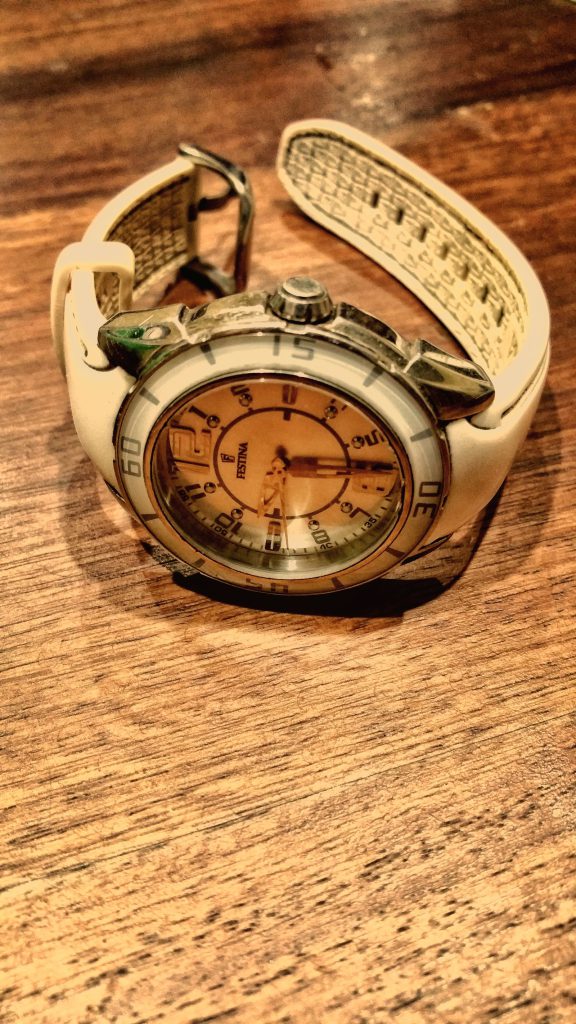
Something that is very important to me is an old silver wristwatch that belonged to my grandfather. My grandmother gave it to me when I graduated from university, about six years ago.
It is quite simple, with a white face and a brown leather strap that I have replaced twice. It is a wind-up watch, so I have to turn the little crown every morning, which has become a small ritual for me. On the back there is an engraving with my grandfather’s initials and the year he got married.
It is important to me because it connects me with my grandfather, who died when I was a teenager. He was a very calm, careful man, and when I wear his watch, especially on important days like job interviews, I feel a little calmer myself. I would be heartbroken if I ever lost it.
Describe something you lost.
You should say:
- what you lost
- where and when you lost it
- what you did to find it
and explain how you felt about losing it.
Sample Answer:
The thing I was most upset about losing was a small notebook I had used as a travel diary for about five years. I lost it on a train in Italy two years ago.
I had been writing in it on a long train journey from Rome to Florence, and I think I put it down on the seat when I went to get a coffee. I only noticed it was missing that evening at the hotel. The next morning I went back to the station and filled in a form at the lost property office, and I also posted a message on a travellers’ forum, but it never turned up.
I felt really sad, much more than if I had lost my phone, because a phone can be replaced, but that notebook was full of tickets, little drawings and memories I can never write again. Since then, I take a photo of each page whenever I finish a notebook.
Describe an old object that your family has kept for a long time.
You should say:
- what it is
- how long your family has had it
- where it is kept
and explain why your family has kept it.
Sample Answer:
An old object my family has kept for a very long time is a large wooden chest that belonged to my great-great-grandmother. It is probably more than a hundred and twenty years old.
It is made of dark pine, with metal corners and a heavy lid, and on the front someone painted flowers and the initials of the first owner, which have almost faded away. Originally it was a kind of wedding chest, where young women kept the linen and clothes they would take to their new home. Now it stands in my parents’ hallway, and we keep winter blankets in it.
My family has kept it because it is one of the very few things that survived from that time. During the war, the family had to move several times and lost almost everything, but somehow the chest always came with them. So for us it is a symbol of the family surviving difficult times.
Describe something you made yourself.
You should say:
- what you made
- how you made it
- how long it took
and explain how you felt about it.
Sample Answer:
Something I made myself that I am quite proud of is a small wooden bookshelf. I built it last winter for my new flat, because I could not find a shop-bought one that fitted the narrow space next to my window.
I had never done any woodwork before, so I watched a lot of online videos and borrowed tools from my neighbour, who is a retired carpenter. I bought pine boards from a hardware shop, measured and cut them, sanded everything carefully and painted it dark green. My neighbour helped me with the hardest part, which was making the shelves completely straight.
It took me about three weekends in total, much longer than I expected. When it was finished, I felt really satisfied, partly because it fits the space perfectly and partly because I had learned a completely new skill. Every time I take a book from it, I feel a little proud.
Useful vocabulary for possessions
Use precise words instead of repeating “thing”, “old” and “important”:
| Topic | Words and phrases |
|---|---|
| Describing objects | antique, hand-made, second-hand, worn, brand-new, a family heirloom, a keepsake |
| Value | of great sentimental value, priceless, irreplaceable, worth a fortune, a bargain |
| Materials | made of wood / silver / leather, engraved with, hand-painted, carved |
| Keeping and losing | to treasure, to hand down, to inherit, to misplace, the lost property office |
| Useful phrases | to mean the world to me, to hold a special place in my heart, to be passed down from generation to generation |
IELTS Speaking Part 1: questions about possessions
Part 1 questions are short and personal. Give a direct answer and add one reason or example.
1Do you keep old things?
Some, yes. I keep letters, photos and a few things from my grandparents, but I try not to keep things I do not use.
2What is the most useful thing you own?
Probably my bicycle. I use it almost every day to get to work, and it saves me a lot of time and money.
3Do you often lose things?
Not often, but when I do, it is usually my keys. I have started keeping them in the same bowl by the door to avoid that.
4Would you like to have fewer possessions?
In a way, yes. Every time I move house, I realise how much I own that I never use, and it makes me want a simpler life.
IELTS Speaking Part 3: questions about possessions and consumerism
In Part 3 the examiner asks about possessions in general. Give longer answers with reasons, examples and both sides of the argument.
1Why do people keep things that have no practical use?
Mainly because of memories. An old toy or a letter has no practical value, but it reminds people of a person or a time in their life, which can be very comforting. Some people also keep things as a connection to their family history, so that the next generation knows where they come from.
2Do people today own too many things?
In many wealthy countries, I think they do. Cheap products and online shopping make it very easy to buy things we do not need, and a lot of them end up in landfill. On the other hand, the growing interest in second-hand shopping and minimalism shows that more people are starting to question this.
3Are possessions a good way to show success?
Many people use them that way, with expensive cars or watches, but I do not think they are a reliable sign. Someone can own luxury items and be deeply in debt. I would say success is better measured by things you cannot buy, like good relationships, health and work you enjoy.
Practise on your own
Choose one of the cue cards above, set a timer for 1 minute to make notes, and then record yourself speaking for 2 minutes. Listen back and check whether you covered every point and used some of the vocabulary from this page. For more topics, see IELTS Speaking Part 2 topics and cue cards with answers.