






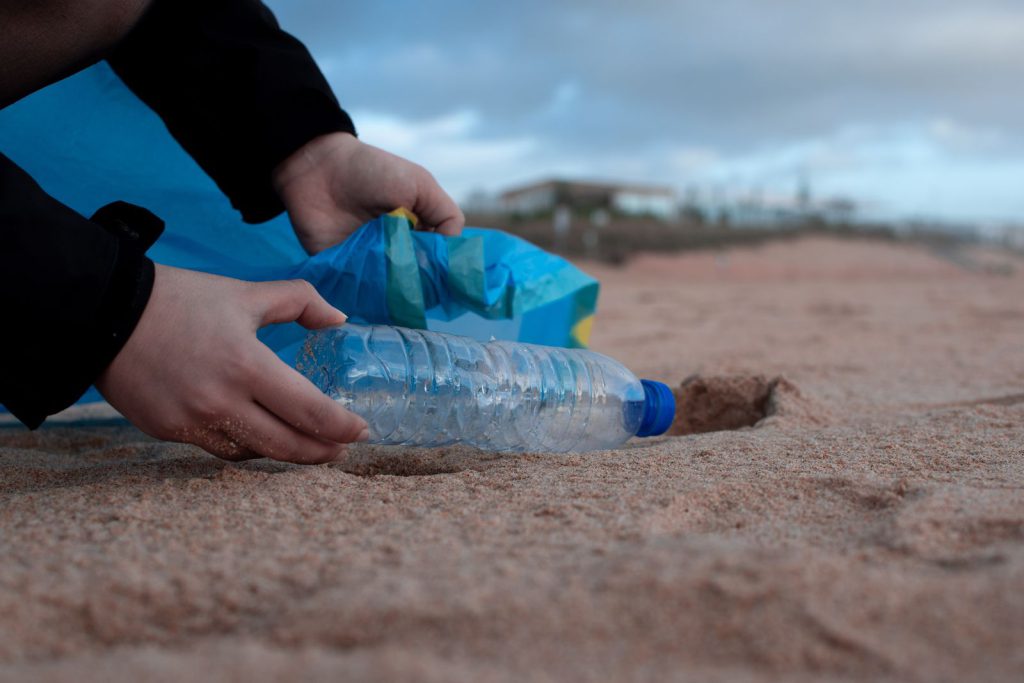
The environment is one of the topics you are most likely to meet in IELTS Writing Task 2. Questions ask about climate change, pollution, waste, energy, transport and who should be responsible for protecting nature. Many of them are problem and solution essays, so you need ideas for causes as well as practical solutions.
On this page you will find 18 environment essay questions grouped by essay type, two band 7+ model essays with notes on the language they use, ideas for both sides of common arguments and useful environment vocabulary.
IELTS Writing Task 2 environment questions
All questions below are written for practice in the style of the real test. Click the essay type to see how to structure that kind of essay.
Problem and solution
- Problem & solutionPlastic waste is polluting oceans and beaches around the world. What are the main causes of this problem, and what can be done about it?
- Problem & solutionAir pollution in large cities is damaging people’s health. What are the causes, and what measures could be taken to improve air quality?
- Problem & solutionMany wild animals and plants are in danger of disappearing. Why is this happening, and what can be done to protect them?
- Problem & solutionHouseholds produce more rubbish than ever before. What problems does this cause, and how can people be encouraged to throw away less?
Opinion (agree or disagree)
- OpinionAir travel should be made more expensive to reduce its impact on the environment. To what extent do you agree or disagree?
- OpinionEating less meat is the most effective thing an individual can do to help the environment. To what extent do you agree or disagree?
- OpinionEnvironmental problems are too big for individual countries to solve, so only international action can make a difference. To what extent do you agree or disagree?
- OpinionCompanies that pollute the environment should pay much higher fines. To what extent do you agree or disagree?
Discussion (both views)
- DiscussionSome people think protecting the environment is the job of governments and large companies, while others believe ordinary people must change how they live. Discuss both these views and give your own opinion.
- DiscussionSome people believe economic growth is more important than protecting the environment, while others think the environment must come first. Discuss both these views and give your own opinion.
- DiscussionSome people think new technology will solve environmental problems, while others believe people need to consume less. Discuss both these views and give your own opinion.
Advantages and disadvantages
- Advantages & disadvantagesSome cities have banned private cars from their centres. Do the advantages of this outweigh the disadvantages?
- Advantages & disadvantagesMore and more countries are building large wind and solar farms in the countryside. Do the advantages of this outweigh the disadvantages?
- Advantages & disadvantagesMany people now buy second-hand clothes and furniture instead of new ones. Do the advantages of this outweigh the disadvantages?
Two-part questions
- Two-part questionMany people throw away clothes, phones and furniture that still work. Why does this happen? What can be done to encourage people to keep things longer?
- Two-part questionMost people say they care about the environment, but few change their daily habits. Why is this? How can people be persuaded to act?
- Two-part questionShould children learn about environmental problems at school? What is the best way to teach them?
- Two-part questionSome people choose holidays close to home to protect the environment. Is this a good idea? What else can tourists do to reduce their impact?
Model essay 1: problem and solution essay on plastic waste
Writing Task 2 Academic & General Training 40 minutes
Write about the following topic:
Plastic waste is polluting oceans and beaches around the world.
What are the main causes of this problem, and what can be done about it?
Give reasons for your answer and include any relevant examples from your own knowledge or experience.
Write at least 250 words.
Plastic bottles, bags and packaging can now be found on beaches in almost every part of the world, and huge amounts float in the oceans. This essay will explain why the problem has become so serious and suggest how it could be reduced.
The main cause is the sheer quantity of single-use plastic that modern societies produce. Food, drinks and everyday products are wrapped in plastic because it is cheap, light and durable, yet most of it is used for a few minutes and then thrown away. A second cause is poor waste management. In many countries, rubbish is not collected or recycled properly, so it ends up in rivers that carry it to the sea. Even where recycling systems exist, a large share of plastic is too contaminated or mixed to be reused.
Several measures could tackle this problem. Firstly, governments could ban or tax the most common single-use items, such as plastic bags, straws and disposable cutlery. Where such charges have been introduced, the use of plastic bags has fallen sharply. Secondly, manufacturers should be made responsible for collecting and recycling the packaging they produce, which would encourage them to design products with less plastic. Finally, wealthier nations could help developing countries to build proper waste collection systems, since plastic in the ocean does not respect national borders.
In conclusion, ocean plastic is caused mainly by our dependence on disposable packaging and by inadequate waste management. If governments, companies and individuals work together, the amount of plastic reaching the sea can be reduced significantly.
Why this essay works
The essay answers both parts of the question in order: causes in the second paragraph, solutions in the third. Each solution is specific and says who should act. The language shows a wide range:
| What the writer does | Example from the essay | Why it raises the score |
|---|---|---|
| A clear plan in the introduction | This essay will explain why the problem has become so serious and suggest how it could be reduced. | Coherence and Cohesion: the reader knows what each paragraph will do. |
| Strong noun phrases | the sheer quantity of single-use plastic that modern societies produce | Lexical Resource: precise, academic-sounding phrases instead of “a lot of plastic”. |
| Contrast with yet | it is cheap, light and durable, yet most of it is used for a few minutes and then thrown away | Shows the contradiction at the heart of the problem in one sentence. |
| Passive voice | rubbish is not collected or recycled properly | Focuses on the problem, not on who causes it: Grammatical Range. |
| Make + object + passive | manufacturers should be made responsible for collecting and recycling the packaging | A less common structure for recommendations. |
| Evidence for a solution | Where such charges have been introduced, the use of plastic bags has fallen sharply. | Task Response: shows the solution can work, not just that it sounds good. |
| First conditional in the conclusion | If governments, companies and individuals work together, the amount of plastic reaching the sea can be reduced significantly. | Ends with a realistic, positive outlook. |
See the problem and solution essay guide for the full structure.
Model essay 2: discussion essay on who should protect the environment
Writing Task 2 Academic & General Training 40 minutes
Write about the following topic:
Some people think protecting the environment is the job of governments and large companies, while others believe ordinary people must change how they live.
Discuss both these views and give your own opinion.
Give reasons for your answer and include any relevant examples from your own knowledge or experience.
Write at least 250 words.
There is broad agreement that the environment needs protecting, but less agreement about who should do it. Some argue that the responsibility lies with governments and large companies, while others believe change must start with ordinary people. In my view, both are necessary, but governments and businesses must lead, because their decisions shape the choices individuals can make.
Those who place the responsibility on governments and companies point to the scale of the problem. A single power station or factory can produce more pollution than a whole town of households, and only governments can pass laws on emissions, invest in public transport or switch a country to renewable energy. Large companies also control how products are made and packaged, so their choices affect millions of customers at once. From this perspective, asking individuals to recycle or turn off lights is a distraction from the decisions that really matter.
On the other hand, there are good reasons to expect individuals to change as well. Companies produce goods because consumers buy them, so if people choose to fly less, eat less meat or buy fewer new products, businesses will have to adapt. Moreover, governments in democracies rarely introduce unpopular environmental laws unless voters demand them. Ordinary people therefore have more influence than they might think, both as customers and as citizens.
In conclusion, I believe both groups share the responsibility, but not equally. Governments and companies should take the lead, by making green choices cheaper and easier, while individuals should support these changes through how they shop, travel and vote.
Why this essay works
Both views get their own paragraph with a reason and an example, and the writer’s opinion goes further than “both are right”: it says who should lead and why. Notice the language:
| What the writer does | Example from the essay | Why it raises the score |
|---|---|---|
| A nuanced opinion | both are necessary, but governments and businesses must lead, because their decisions shape the choices individuals can make | Task Response: a clear position with a reason, not a vague middle view. |
| Reporting views precisely | Those who place the responsibility on governments and companies point to the scale of the problem. | Introduces the first view without “some people think” again. |
| Comparison | can produce more pollution than a whole town of households | A concrete comparison makes the argument convincing. |
| Only + subject + modal | only governments can pass laws on emissions | Emphasises the key point: Grammatical Range. |
| Conditional with will | if people choose to fly less … businesses will have to adapt | Shows cause and effect clearly. |
| Unless | rarely introduce unpopular environmental laws unless voters demand them | A less common conditional linker that examiners notice. |
| Topic collocations | pass laws, renewable energy, take the lead, green choices | Lexical Resource: natural phrases for this topic. |
Learn more in the discussion essay guide.
Ideas for common environment arguments
Not sure what to write? These ideas cover causes, effects and solutions that environment questions often ask about. Choose two or three and add an example of your own.
| Problem | Causes | Solutions |
|---|---|---|
| Climate change | burning coal, oil and gas, deforestation, more flights and cars | renewable energy, carbon taxes, better public transport, planting trees |
| Air pollution | traffic, factories, heating with coal or wood | low-emission zones, electric buses, cycling lanes, stricter limits for industry |
| Plastic and waste | single-use packaging, cheap products, poor recycling | bans and charges, deposit schemes for bottles, repair shops, buying second-hand |
| Loss of wildlife | cities and farms replacing forests, pollution, hunting, climate change | national parks, protecting habitats, stricter laws, sustainable farming |
| Water shortages | growing cities, farming, drier summers | saving water at home, fixing leaking pipes, recycling water for farming |
Useful environment vocabulary for Task 2
Use precise words and collocations instead of repeating “nature”, “pollution” and “bad for the environment”. For more, see our IELTS writing vocabulary page.
| Area | Words and phrases |
|---|---|
| Climate | global warming, greenhouse gases, carbon emissions, extreme weather, rising sea levels |
| Pollution | air quality, exhaust fumes, toxic waste, to contaminate, to dump waste |
| Resources | fossil fuels, renewable energy, natural resources, to run out of, to conserve |
| Nature | wildlife, natural habitats, endangered species, deforestation, biodiversity |
| Solutions | to cut emissions, to go green, sustainable, eco-friendly, to raise awareness, to impose a tax on |
| Effects | to have a harmful impact on, to pose a threat to, irreversible damage, to deteriorate |
More Writing Task 2 topics
Practise with environment questions until you can plan an essay in 5 minutes, then move on to other topics. Our list of IELTS Writing Task 2 topics and questions has 84 practice questions on 14 topics. You will also find model essays for education, technology and crime questions.
IELTS Writing Task 2 environment: FAQ
Quick answers to the questions people ask most.
How often does the environment come up in IELTS Writing Task 2?
It is one of the most frequent Task 2 themes, together with education, technology, health and work. Transport, energy and tourism questions often have an environmental side too.
Do I need facts and statistics?
No. The examiner checks your English and how well you answer the question, not your scientific knowledge. General, believable examples, such as plastic on beaches or traffic in cities, are enough.
Which essay type is most common for environment topics?
Problem and solution essays are very common, but environment questions appear as every essay type. Read the last sentence of the task carefully to know which structure to use.
How can I avoid repeating “environment” and “pollution”?
Use more precise words for the exact problem: carbon emissions, exhaust fumes, plastic waste, natural habitats or air quality. The vocabulary table above gives more options.